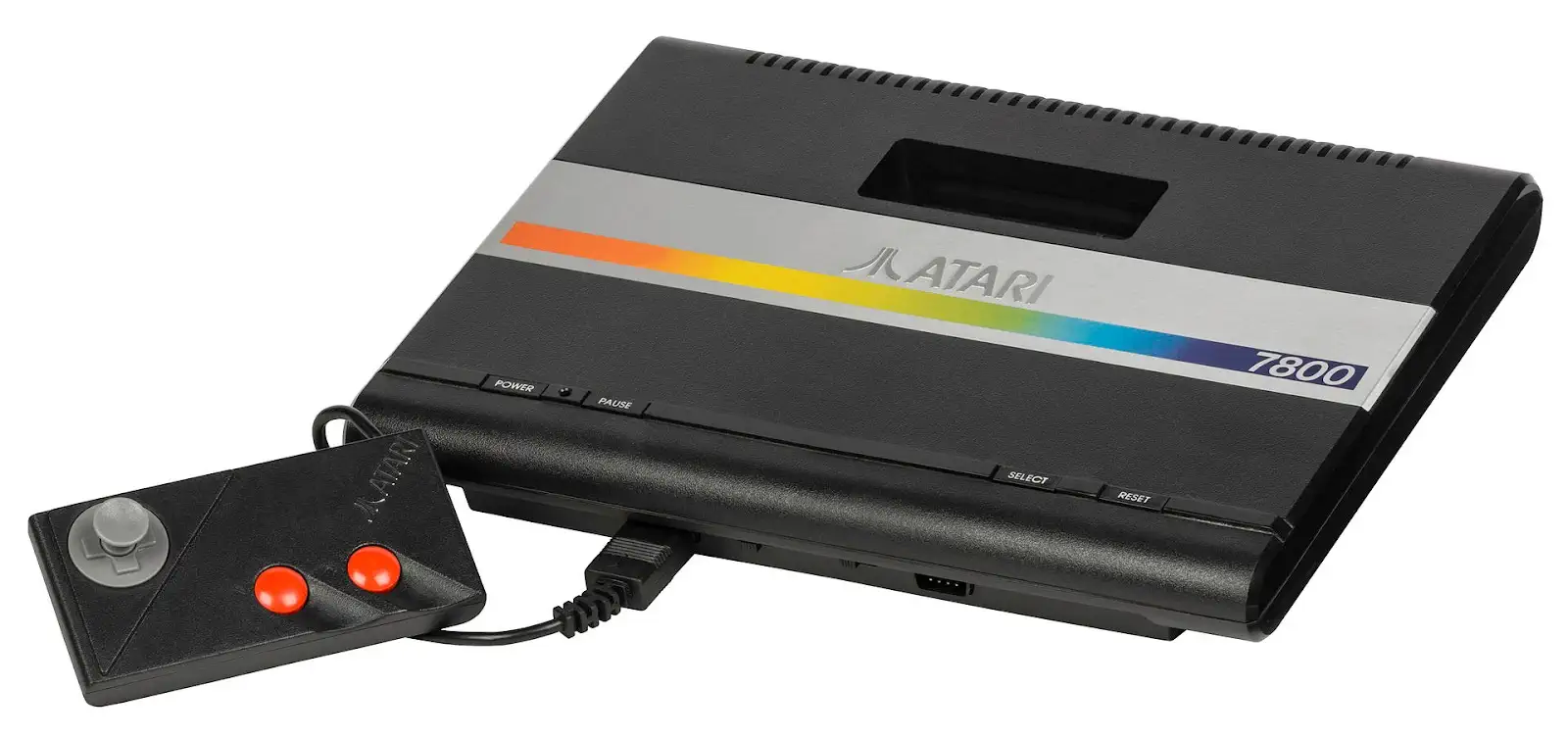

The Atari 7800
The Atari 7800 was launched as the Atari 7800 Pro System in 1986 as the successor to both the Atari 2600 and the Atari 5200. Unlike the Atari 5200 the 7800 could run almost all the games that were released for the 2600.
The new system had improved graphics hardware over the previous consoles, but it still had the TIA on board to generate sound. Game makers were forced to get their games digitally signed by Atari, in an effort to improve the quality of the releases.
The 7800 has a custom variant of the 6502 CPU, the Atari SALLY. This CPU runs at 1.79MHz but drops to 1.19MHz if the TIA (for sound) or RIOT chips are accessed. The RIOT chip handled the Joysticks, and the RAM I/O timer
The system has better graphics than its predecessors:
- 160x240 NTSC, 160x288 PAL
- 320x240 NTSC, 320x288 PAL
There is a limit of 30 sprites per scan-line, and a total of 100 sprites on the screen. This is a huge leap from the Player Missile Graphics that the 2600 used. Sprites can be 4 to 160 pixels wide, with a height of 4, 8, or 16 pixels. Each sprite could have 1 to 8 visible colors, and 1 to 4 transparency bits.
Atari 7800 - European version
The Atari 7800 had important differences between the U.S. release (1986) and the European release (1987–1988), mainly due to hardware standards, packaging, and game compatibility. Here are the key contrasts:
Video Standards
- US Version: NTSC output (60 Hz, 525 scanlines)
- European Version: PAL output (50 Hz, 625 scanlines)
Cartridge Compatibility
Both regios used the same 7800 cartridge design, however often games would not run on the PAL machines or vice versa due to differences in speed and game timing, or showed visual glitches.Packaging, Branding and Controllers
In the US Atari marketed the games with gray boxes and randbow stripe artwork. They also branded the machine itself as the 7800 ProSystem. In Europe the box art was sometimes different, with additional translations and the packaging of the machine emphasized compatibility with the 2600 system. The controllers in the US were the Pro-Line joysticks, but the European version shipped with the old 2600 style Atari CX40 joysticks, or sometimes even third party controllers, depending on the distributor and country.Other Differences
Of course the power supply that came with the machine was different for Europe and the US. There was also much wider retail support for the 7800 system in the US than in Europe. Europe saw fewer titles released officially, and the distribution was patchier. Some games were only available in certain countries, to the frustration of gamers